



Foreign Languages
Spanish Progression in Skills & Knowledge
Intent
We believe that learning a modern foreign language is an essential life skill. At Rutherford House School, we teach Spanish to give pupils the knowledge, confidence and cultural understanding to communicate in many countries around the world, and in a variety of situations.
Our curriculum develops the four key language skills — listening, speaking, reading and writing — both inside and outside the classroom. Pupils are encouraged to use Spanish in different contexts and with different audiences, fostering independence, curiosity and enjoyment in their learning.
We want our learners to approach Spanish with enthusiasm, take risks and use the language with pride, while consistently demonstrating and living out all our school values, such as respect, ambition, resilience, reflection, partnership and enthusiasm. They understand that learning another language supports personal, intellectual and emotional growth, while helping them appreciate other cultures, traditions and celebrations.
By the time pupils leave RHS, they will:
- Understand how Spanish works, including key vocabulary and basic grammar such as gender
- Confidently apply the four main language skills in a variety of contexts
- Use thinking skills, learning tools such as thinking maps and AI resources to strengthen their learning
- Have a broad understanding of the world, particularly Hispanic cultures, traditions and celebrations.
Our intent is for every child to leave RHS as a confident, curious and culturally aware communicator, ready to embrace the opportunities that language learning brings.
Implementation
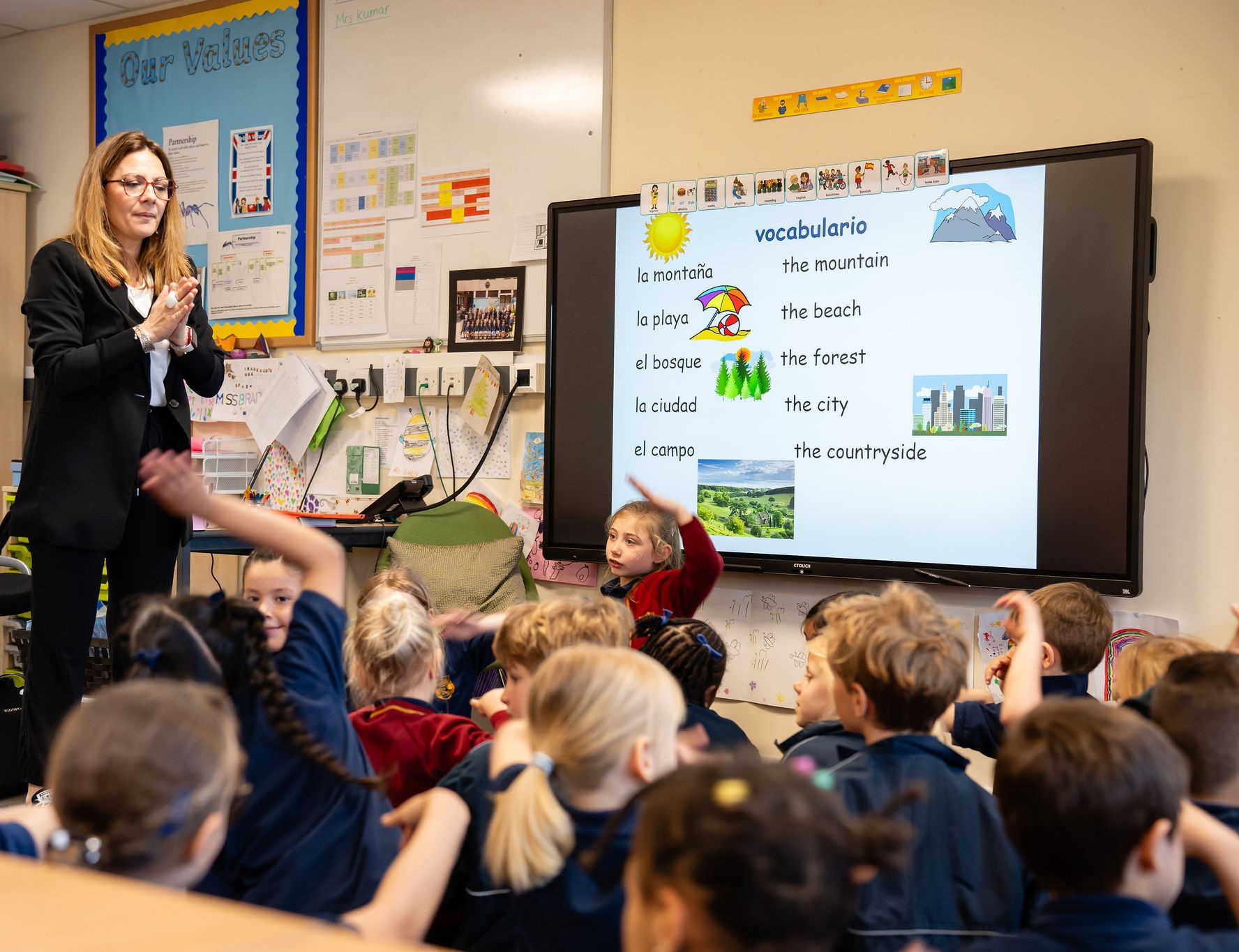
Spanish is taught weekly from Reception through to Year 6, with lessons led by our specialist Spanish teachers. Lessons are active, engaging and immersive, incorporating songs, role-plays, grammar games, storytelling and interactive activities using iPads and digital platforms such as Duolingo. Pupils build their understanding of basic grammar year by year and take part in reading and writing activities to deepen their knowledge.
Teachers actively encourage children to use the target language as much as possible throughout lessons, building confidence and fluency through authentic communication. Most lessons are delivered primarily in Spanish, providing pupils with regular opportunities to develop their speaking and listening skills in meaningful and practical contexts.
Spanish is also woven into daily school life beyond the classroom. Pupils use greetings and simple phrases around school and participate in a range of cultural celebrations such as European Day of Languages, International Mother Language Day, Spanish Day and language-themed competitions during whole-school events. Each year group takes part in Spanish enrichment activities, including workshops and creative projects inspired by Hispanic culture.
Further opportunities for language learning are provided through extracurricular clubs such as the Key Stage 1 Modern Foreign Language Culture Club, and community links, including visits to local businesses like Peruvian food shops, where pupils can explore language and culture in real-life contexts.
Through this rich and varied approach, pupils experience Spanish in meaningful, creative and enjoyable ways, ensuring they can use the language confidently both inside and outside the classroom.
Impact
Pupil progress in Spanish is monitored continuously through daily lessons and formally each half term, with outcomes recorded in the Modern Foreign Language (MFL) foundation data document. Work in pupils’ books shows clear year-on-year progression in language knowledge, vocabulary and writing.
The MFL subject leader and specialist teachers closely track each child’s development, and this is reflected in the annual school report, which includes every pupil’s attainment in MFL. Progress is assessed through informal methods such as teacher observations, written tasks, oral activities and peer interactions. Teachers evaluate responses to questions, participation in role-plays and discussions, and both self- and peer-assessment.
Marked books and written tasks provide ongoing evidence of progress, supported by informal assessments and foundation data. Medium-term and individual lesson plans are adapted where needed to ensure continued development.
Additional evidence, such as Class Dojo videos and performance management records, further reinforces pupils’ learning journeys.
This comprehensive approach also supports the school’s goal of achieving the International Level of the British Council’s International School Award for Spanish, while strengthening international links. As a result, pupils leave RHS with a strong foundation in Spanish and the confidence to continue their language learning into Key Stage 3 and beyond.